Knowledge that is easier to use
Bring policies, property details, and experienced-staff knowledge into approved answers people can find when they need them.
Practical AI consulting for independent operators
Talusmark helps independent, owner-led businesses streamline staff work, automate repetitive tasks, improve customer experience, and make better use of operational information—with practical solutions their teams can use and maintain.
Built from firsthand experience in campground and outdoor-hospitality operations.
Explore servicesWhere operations can work better
That may mean fewer things to remember, faster access to trusted information, smoother handoffs, or a new service your team could not support efficiently before.
Independent businesses are people-centered, full of exceptions, and often asked to do more with limited capacity. Talusmark looks for practical opportunities to simplify, automate, strengthen, or extend the work.
Bring policies, property details, and experienced-staff knowledge into approved answers people can find when they need them.
Give guests timely, consistent help while creating clear paths for requests, ordering, and staff follow-through.
Help new and returning staff become useful quickly with practical guidance embedded in the work.
Turn disconnected reports and property knowledge into timely, trustworthy support for owner and manager decisions.
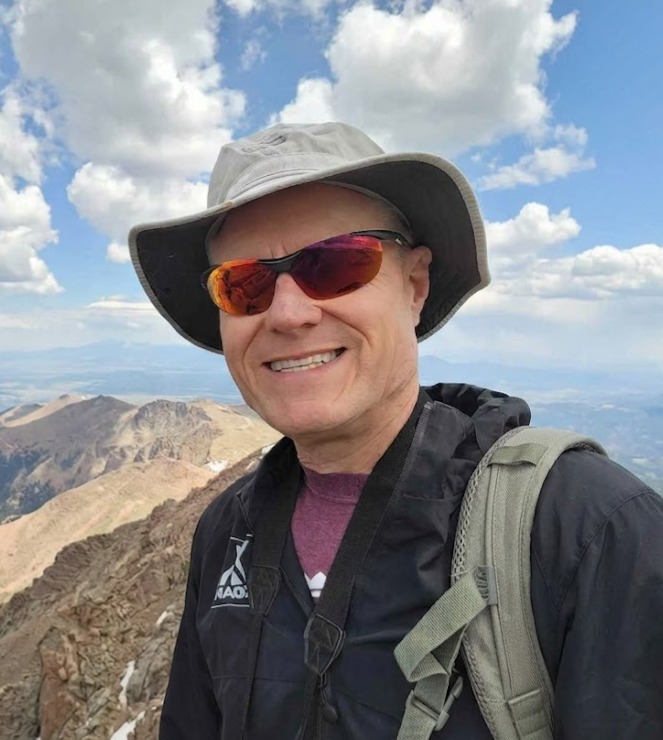
About Talusmark
Deric Gunter Founder
Talusmark grew out of a decade of hands-on campground operations and a long career creating and implementing business technology. It began with the need to solve real guest-service, staff, reporting, inventory, and communication problems—not a search for somewhere to apply AI.
That combined perspective shapes every engagement: understand how the work actually happens, identify the opportunity worth pursuing, determine where technology can genuinely help, then design a practical solution your team can realistically use and maintain.
Service menu
The menu moves from education and opportunity selection through proof, implementation, the operating system around the solution, and defined ongoing support. Clients enter at the stage their situation warrants.
First conversation
A short, low-pressure conversation helps us understand the operating goal, the people affected, and whether Talusmark is a sensible fit.
The result is a clear next step: training, an opportunity engagement, a bounded pilot, a proposal for a well-understood need, or no further work yet.
Start a conversationBuild shared, role-specific capability with relevant operating examples, safe-use guidance, and practical exercises that help teams use AI with appropriate review and escalation.
Turn operating friction and scattered ideas into a prioritized, risk-aware opportunity with an owner, evidence plan, constraints, and practical first phase.
Test one bounded, lower-risk workflow or capability with approved information, human review, a manual fallback, acceptance measures, and a clear closeout decision.
Put one validated capability into reliable day-to-day operation with approved integrations, testing, training, documentation, safeguards, monitoring, rollback, and ownership handoff.
Establish the knowledge, roles, permissions, procedures, review, escalation, governance, testing, measurement, and maintenance layer around one or more AI-enabled capabilities.
Keep active capabilities useful through scheduled health and value reviews, seasonal readiness, staff support, governance checks, a prioritized improvement backlog, and explicit continue, adjust, expand, or retire decisions.
Field work
These field studies are drawn from practical tools and workflows built and used at a campground operated by Talusmark’s founder—not from hypothetical demonstrations.
Disconnected reports and property knowledge become private, source-aware decision support without giving an assistant authority over pricing, marketing, or operating decisions.
Operational decision support
Read the field case studyGuests move from approved campground answers into structured requests and ordering, while staff control approvals, charges, preparation, delivery, and exceptions.
Live operating workflow
Read the field case studyScanning and receipt-assisted entry simplify product intake, while staged updates, reconciliation, and shared counts improve stock visibility without replacing the retail system.
Receipt-assisted intake, controlled synchronization, and shared stock visibility
Read the field case studyA grounded approach
The strongest solution may be a better knowledge base, a staff workshop, a small workflow, or a decision to wait. The point is not to add AI. The point is to make the right work easier to do well.
Map the operating goal, current work, people, systems, evidence, constraints, and underlying cause before selecting technology.
Choose the smallest worthwhile intervention, then define ownership, sources, review, escalation, fallback, and measures.
Implement a bounded capability and test representative, edge, privacy, permission, and failure cases before launch.
Train the team, hand off ownership, monitor real use and outcomes, and make an explicit continue, adjust, expand, or retire decision.
Principles in practice
Common questions
Scope, access, responsibilities, commercial terms, and the support boundary are made clear before work begins.
That depends on the engagement. Talusmark will identify the owner, staff participants, interviews, source review, testing, training, and approval time needed before work begins. The goal is to involve the right people at defined points without creating an open-ended burden.
Not automatically. Talusmark starts with the minimum information and access needed, using approved content, sample exports, or synthetic test data where practical. Direct system access or sensitive data is considered only when the purpose, permissions, safeguards, and responsible owners are clear.
Either may be appropriate. The first choice may be better training, a clearer process, or configuration of a tool you already use. When necessary, Talusmark can design an approved integration, a bounded workflow around an existing system, or a specific custom capability—without casually replacing the systems that remain authoritative for your operation.
The handoff identifies the operating owner, accounts and access, approved sources, configuration, documentation, procedures, maintenance tasks, known limits, and support boundary. Client-specific data, content, credentials, and operating responsibilities remain clearly separated from Talusmark's reusable methods and components; specific ownership terms are documented in the engagement agreement.
Talusmark first defines the outcome, boundaries, responsibilities, access needs, effort, risk, and practical value of the work. The recommended scope and fee are then presented for approval before work begins. Major integrations, new builds, third-party services, hosting or model usage, travel, and other material additions are included only when explicitly scoped and approved.
No. A pilot is a bounded, reviewable test of one lower-risk workflow or capability—not an unrestricted production deployment. Its closeout review leads to an explicit decision: stop, redesign, stabilize, or move into a separately approved implementation.
Start with one worthwhile opportunity
Bring a process you want to streamline, repetitive work you may be able to automate, a service you want to improve, or a new capability you are considering. We can start there.
Prefer email? hello@talusmark.com